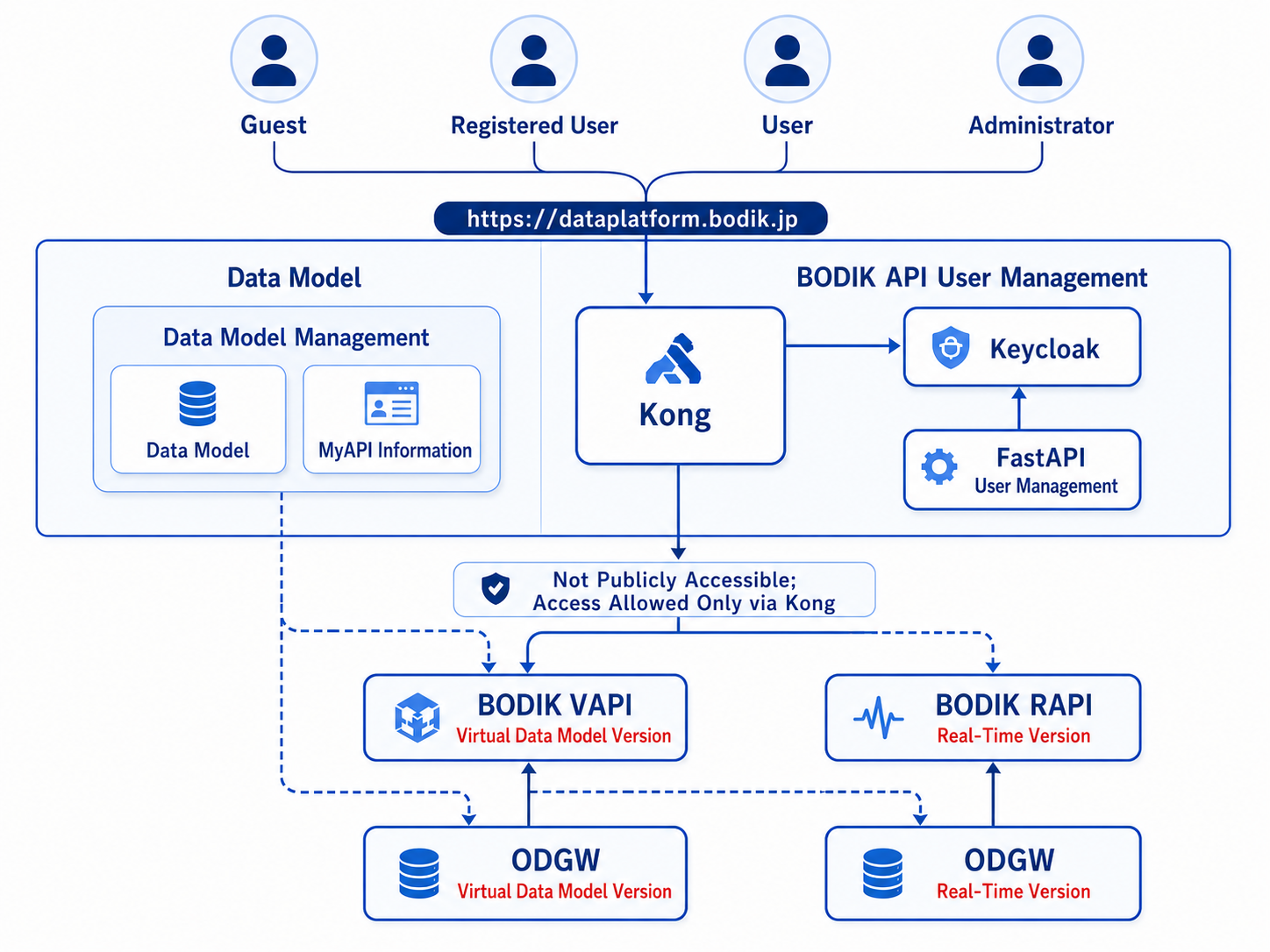
BODIK R&D's research and development advances through a set of projects, each addressing the challenges of a particular layer within public data infrastructure. Rather than independent feature sets, these projects are the building blocks that, when interconnected, form a public data integration infrastructure suited to the AI era.
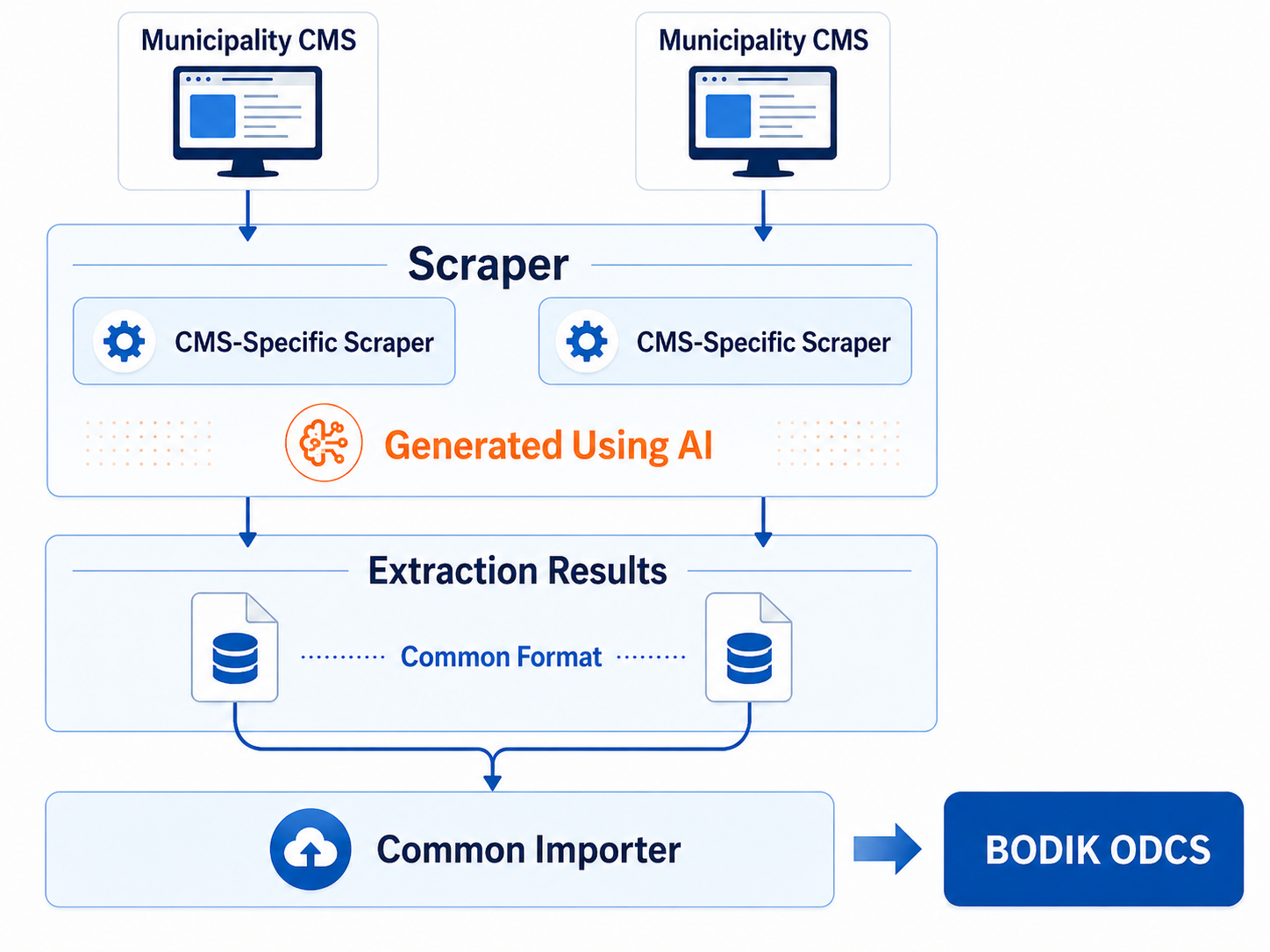
In many municipalities, even when information that should be published already exists in a CMS, the process of reorganizing it for an open data platform and reflecting it on a continuous basis involves a heavy burden. As a result, the continuity of publication tends to break down, and operations come to depend on the individual efforts of responsible staff.
cms_to_ckan is a research and development project for connecting information assets in existing CMSs to open data publication platforms. Through analyzing target structures, applying conversion rules, formatting for publication, and handling incremental updates, it aims to automate publication work and reduce operational overhead. Using AI as an aid to improve the flexibility of structural comprehension and migration processing is also an important feature of this project.
This project is not merely a migration tool. By strengthening connectivity with existing information assets, it plays the role of transforming open data publication into sustained infrastructure operation.
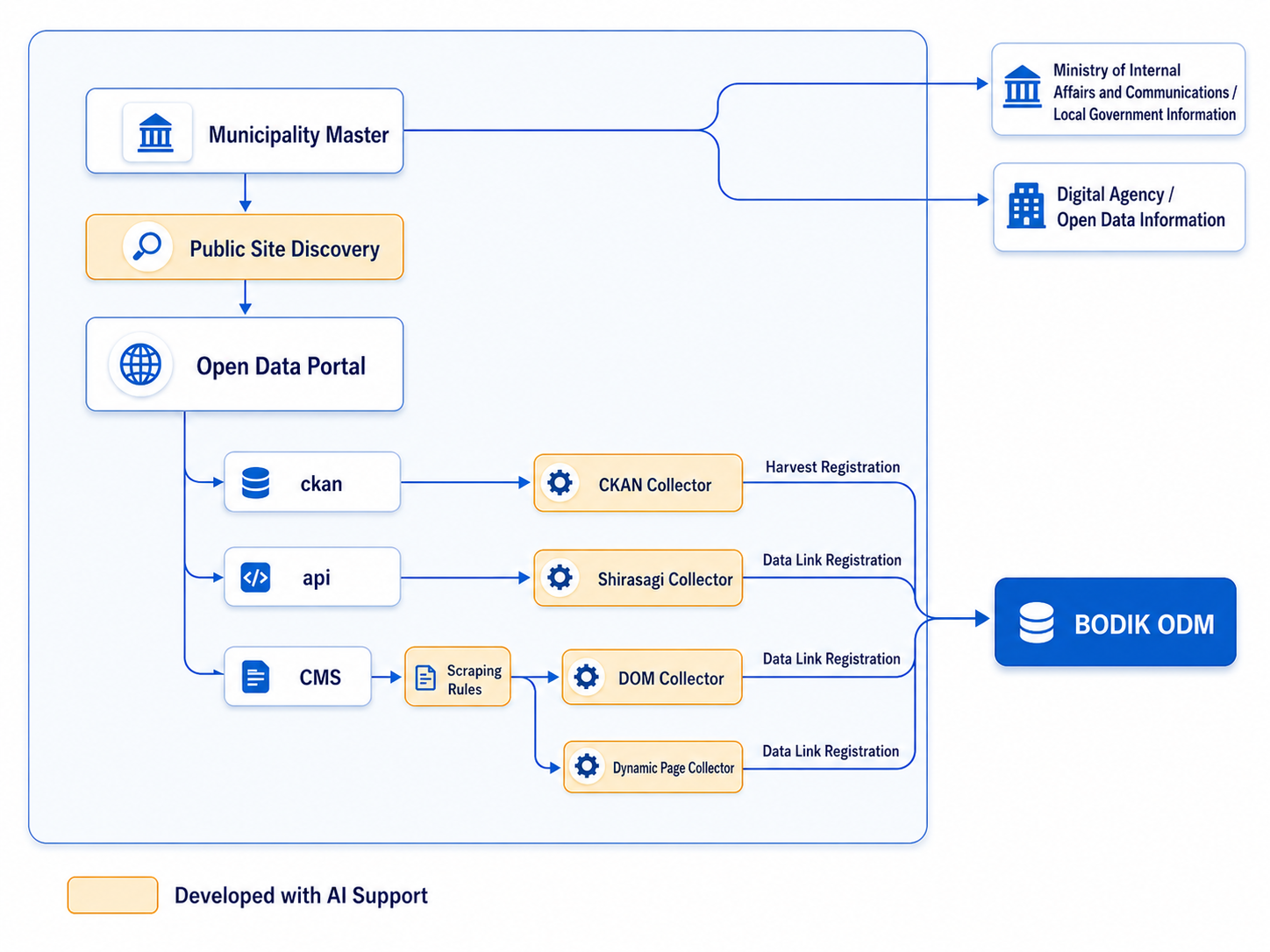
The prerequisite for utilizing public data is first being able to establish where data is published and in what form. In practice, however, publication locations and structures vary across municipalities, and continuous manual effort is required for collection and tracking.
ODMM-ai is a research and development project to automate the processes of discovery and identification. It aims to traverse municipal websites, locate published content, recognize it as a valid collection target, and connect it to continuous update tracking.
The value of this project extends beyond labor savings. When knowledge of publication locations becomes stable, the viability of downstream stages — collection, metadata enrichment, API delivery — also improves. ODMM-ai is positioned as the project that manages the entry point of the entire infrastructure.
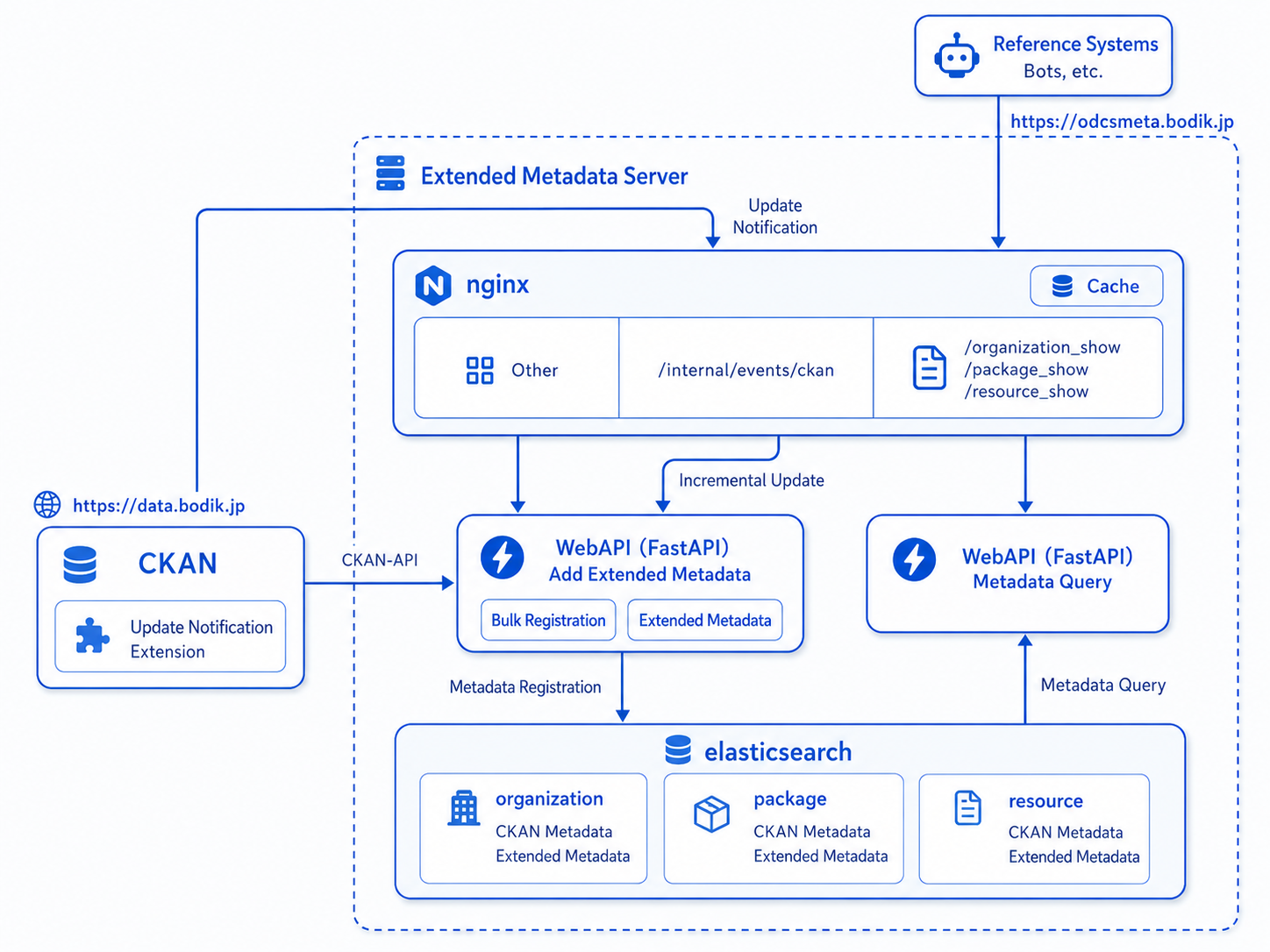
Even when a published dataset exists, if its content, intended use, and comparability are not conveyed adequately, utilization remains limited. For both humans and AI, insufficient metadata is a major factor in reducing discoverability and comprehensibility.
The Extended Metadata Server is a research and development project for enriching metadata in multiple layers. By building upon the original information at the point of publication with machine-based normalization and supplementation, and then AI-generated summarization and semantic enrichment, it brings datasets into a state that is more readily understood. It is the project that most directly embodies the AI-Ready concept in BODIK R&D.
Through this project, users are better able to grasp the content and intended use of data, and AI is better positioned to perform search, classification, recommendation, and comparative support. It is positioned as a core layer for elevating the publication platform from a place for listing to a collection of comprehensible resources.
Even for data on the same subject, field names, date formats, types, units, and representations differ across municipalities. While these differences may be natural within each operation, they become significant barriers in cross-sectional comparison or wide-area use scenarios.
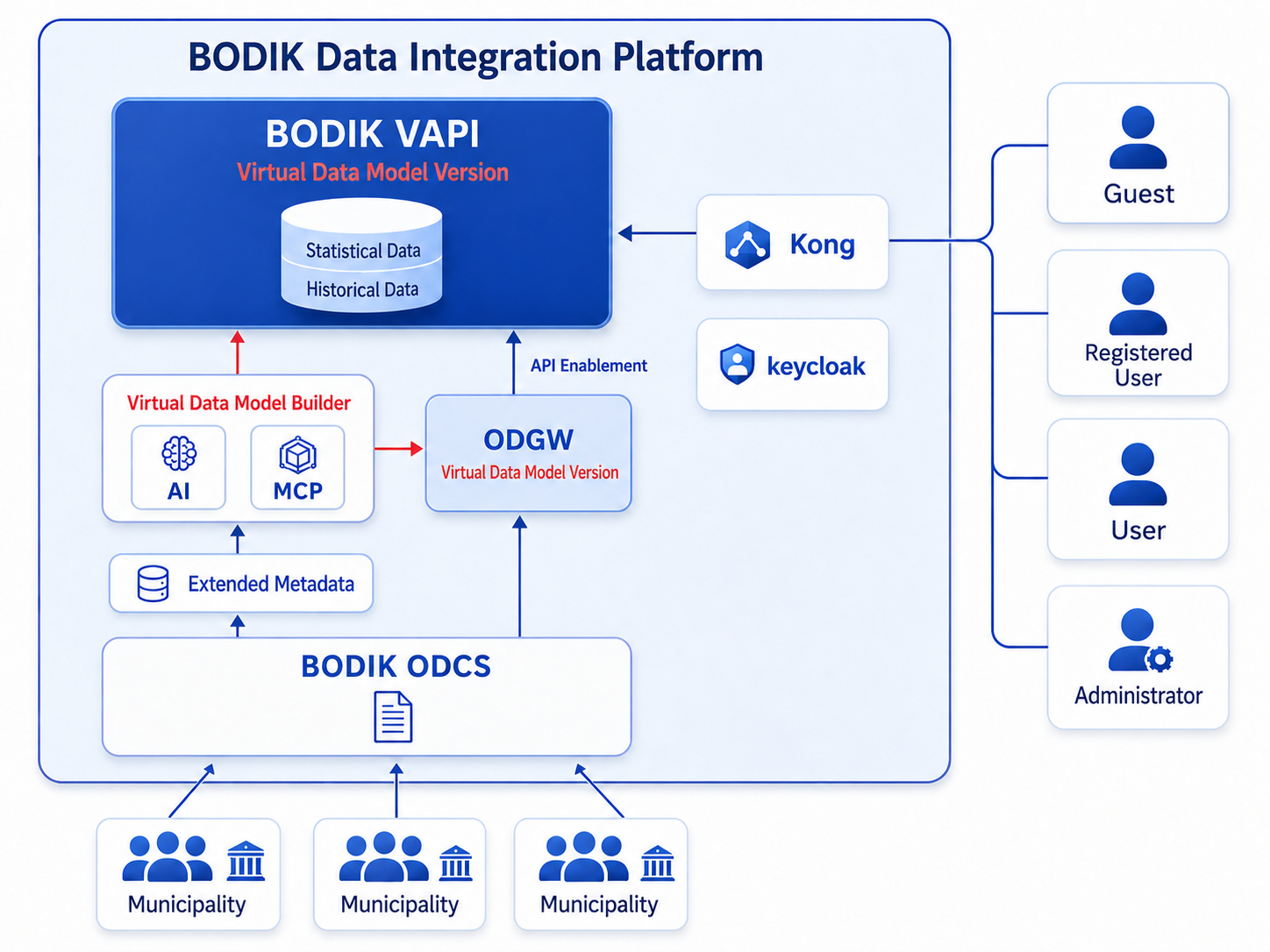
VAPI is a research and development project to absorb these differences at the API layer and provide users with a consistent retrieval interface. Behind the scenes, it performs field-name mapping, type conversion, format normalization, and cleansing based on a virtual data model, aiming to make datasets usable without having to be aware of individual differences.
Importantly, VAPI does not impose uniform standardization. It also maintains an NGSI interface to ensure connectivity with existing FIWARE-based assets and shared infrastructure.
Most public data continues to center on static file publication. At the same time, the need to handle frequently updated information — facility reservation status, disaster-related information, sensor readings, transit status — is growing.
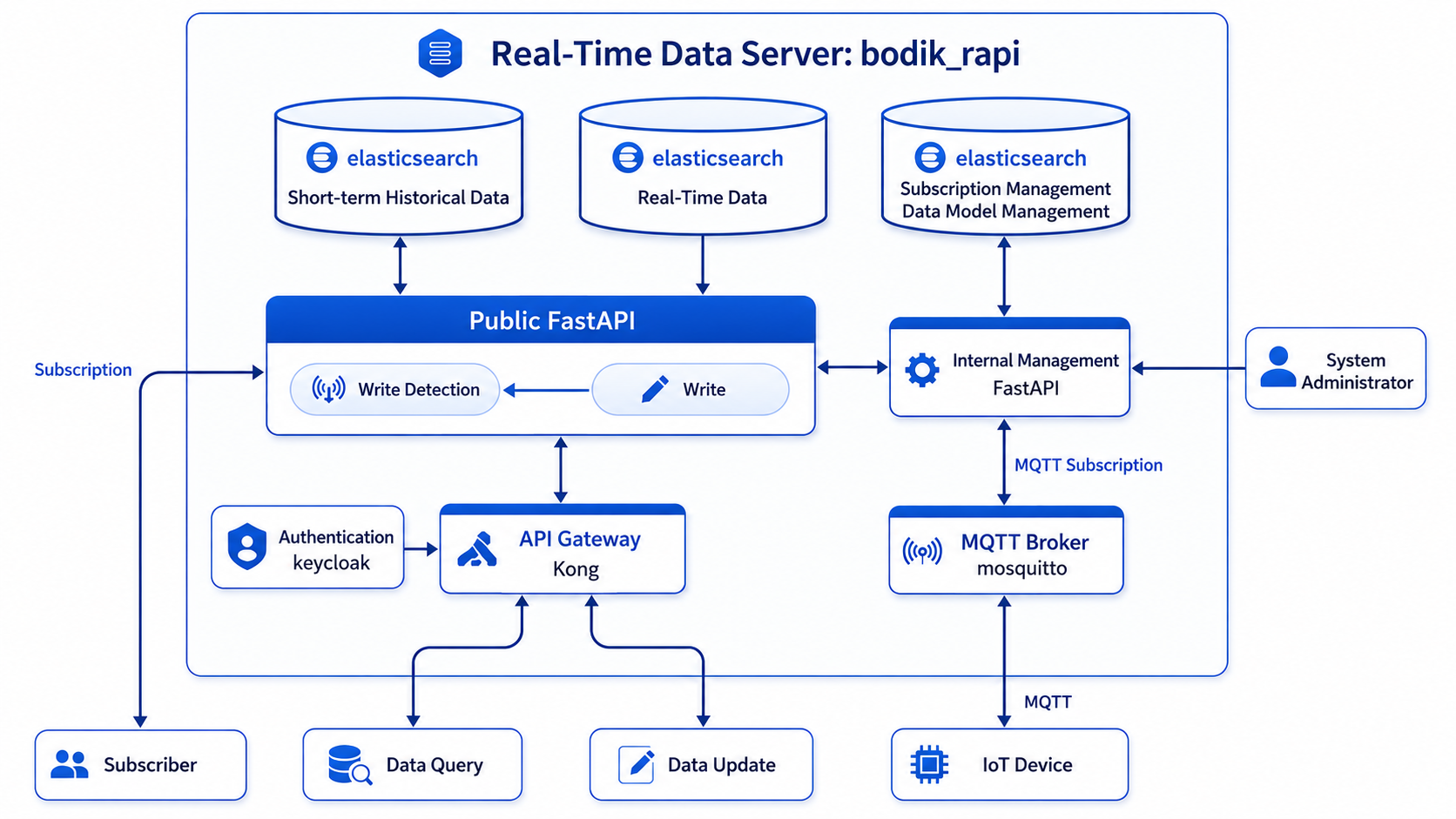
RAPI is a lightweight real-time data integration infrastructure for handling this kind of dynamic data. It combines FastAPI, Elasticsearch, MQTT, and related technologies to implement update notification, subscription, short-term history management, and API-based access. By maintaining an NGSI interface, it enables interconnection with existing infrastructure.
RAPI makes it possible to handle both static published data and dynamic integrated data within the same infrastructure philosophy, and is an important component for expanding the scope of public data utilization.
Even when individual research outcomes and APIs exist, if they remain fragmented from the user's perspective, the value of the infrastructure as a whole cannot be fully realized. What users need is an environment where they can access multiple technical components consistently and in accordance with their purposes, without having to be aware of those components individually.
Data Platform is the project positioned as the integrated access infrastructure for this purpose. It brings together authentication and access control, API connectivity, data model reference, and a user-facing interface into a single environment, establishing each of BODIK R&D's outcomes as an interconnected infrastructure.
The role of this project is not simply to build a portal interface. It lies in reconstituting metadata enrichment, VAPI, RAPI, and automated discovery and conversion from the user's perspective, and connecting research outcomes to the entry point of real-world deployment.